Psychology Series 7: Tim Wienecke / Masculinity, Anxiety, US AirForce

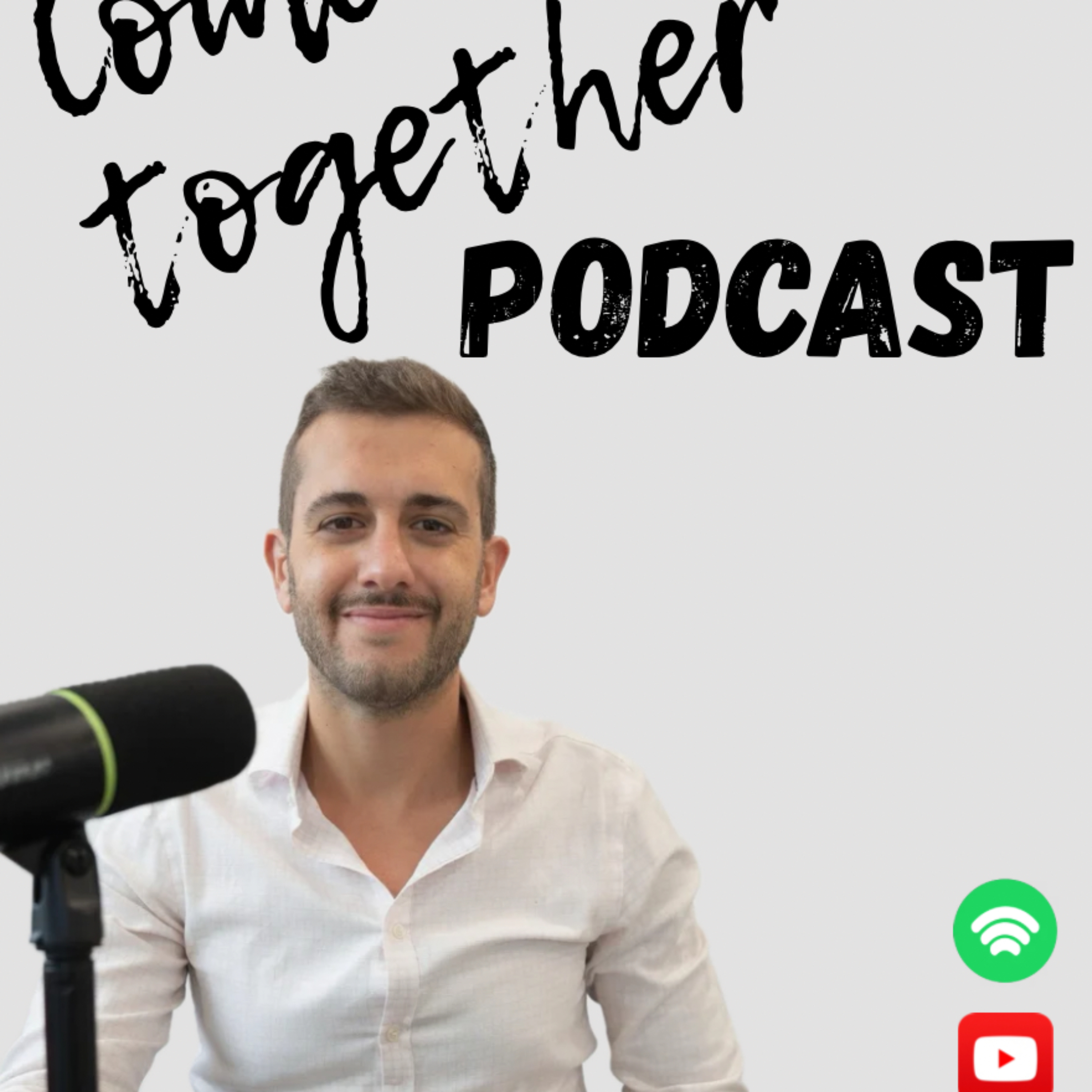


 RSS Feed
Tim Wienecke is a licensed psychotherapist and specializes in addiction / recovery, trauma, anxiety, domestic violence, PTSD, and trauma recovery.
He trained with NSA while in his US AirForce career, and became a lead instructor for the AirForce Bystander Program (identifying and intervening prior to harassment or assault occurs).
Tim is also the host of the American Masculinity podcast.
https://youtu.be/VECsPUCYpwo
https://empoweredchangece.com/american-masculinity-podcast
0:01 Welcome to another episode of Come Together and we are live with Tim Winnick. Winnick, Winnicky. Winnicky. close. OK, well, it wasn't too easy I guess, but thank you so much for making the time. I'm so happy to have you here. Welcome. Thank you. Thank you, man. Good to see you again. Of course, good to see you too. I, I, we had that initial phone call other day and I got really excited because I was like, you know what, this sounds like it's going to be a lot of fun. One of the things that immediately jumped out, we're going to kind of go through, I guess, a little bit of life story and a little bit of, you know, your thoughts and, and your, your expertise specifically in the, I guess, therapy and psychology areas. But one thing that jumped out immediately was your emphasis in your profiles and online presence on masculinity, because I feel like masculinity has become a little bit of a dangerous word to be just throwing around and to really, you know, particularly identify yourself with, you know, and so it either.
1:11 And so it must be extremely intentional, I'm sure. And so I kind of would love to start by just diving into what how you got started, you know, fully embracing that kind of term and what it means to you and what it means for, you know, for men around the country and around the world today. So nothing broad or big, not much, right? I let you. I let you run with that however you want to. That's great man. So I my background was I worked on interpersonal violence and sexual assault prevention for about 6 years before I got into doing my clinical work. And so that put me on the front end of me too. Right when me Too started, I was already working in survivor services and the like and it was really excited when me too kicked off.
1:55 A lot of guys doing a lot of bad things. The numbers tend to be misleading when they when we think of men, right? So we know that one in three women survive some kind of sexual misconduct, one in four men survive some kind of sexual misconduct. And we know that men are primarily the perpetrators. There are female perpetrators. That's certainly a story and we need to be aware of that. And the vast majority of the time when someone's hurting somebody in that way, it's a man. And so as me too progressed, it started to kind of weigh on me a little bit in how we were framing things. And yeah, if somebody sexual assaults somebody, if somebody abuses somebody, we absolutely need to address that. We absolutely need to do things about that. There needs to be better accountability. And these things need to stop happening to women and men across the board.
2:39 But the numbers are really misleading. That one in three and one in four number almost makes you feel like one in three of the guys you meet are perpetrated. And that's not true. It takes about 10 people coming forward for one perpetrator to have any consequence for what they do because it's an incredibly difficult and unaligned crime to the way our justice system works. We have the beauty of innocence and innocent until proven guilty, which leaves us in this place where all the things that you want to do after something like that happens, gets rid of evidence, makes it hard to prosecute. And so as me too progress as we started really seeing people get treated and ostracized like they were an assaulter, like somebody who'd done these horrible things.
3:24 And there needs to be a range of consequence, right? Like a 17 year old boy who's acting kind of creepy because he's first noticing somebody for the first time his life, he needs some guidance. He needs some correction, right. But maybe don't treat him like somebody who grabbed a girl on a bus. Yeah, right. Yeah, yeah. And So what I noticed is the guys that were talking about this stuff before that we're getting any kind of traction in the public, I tended to be men's rights guys. They were guys that were blaming women for the problems that were saying that the ways that men needs to be men are ways that tend to hurt people or tend to make people smaller. And we've just started in the last few years seen people move away from that, where now we're talking about, yes, there's a lot of problems in the world.
4:09 Yes, we have a problem with sexual assault and violence and men are struggling as well. And we need to figure out how to integrate these struggles into a more cohesive whole so that we all can get better. It's not a matter of competition. It's not a matter of women need this and men needs this, it's that if we want these things as a society, these are the things we need to be doing and that's been really exciting the last few years. Right. I guess the, I guess what I think the issue that maybe a lot of people felt is that the association that people felt that they had, you know, with manlyhood or masculinity equals domination in some kind of form or the other. And like the more power, the more dominating you are. It's an expression of, of how great quote UN quote great you are and that and you know, and you know, I could understand, I can't even understand how people get from point A to point B. If someone's going to be a caretaker, if someone's going to be a protector, it's a very, very slippery slope to go from the protector to the dominator.
5:06 I feel like, especially if you're not, even if you're not particularly self aware. And you know, the other curse, I guess that until the last 1520 years, if not more, has been that we're not usually very self-conscious of our actions, you know, and we don't tend to delve into our behavior and, and consider it and then consider the roots of it. So I, I can imagine that that's probably the premise of where a lot of the where some of the issues at least start popping up. Yeah, I think so. The the book I'm working on, I'm trying to figure out how to talk about these things from a generational perspective. But the, I think the main way that it all started to go kind of badly is when we moved men away from the dad role into the provider role and put women out of a provider role entirely into a caretaking role where we kind of siloed by gender the different ways that we're supposed to be in the world.
6:01 And that's had some really unfortunate consequences because we now know and all the data consistently backs up, you need kind of two parents or two people doing two different things, right? And one parent can do it all. Like this is not a dig at single parents, right? It's just harder. But the feminine is the nurturing aspect, right? Like, I love you, be safe. You're always safe here. And then the masculine is, hey, the world can be dangerous. Show me how high you can climb. Show me how you can be safe in the world. Show me what you can do. And kids need both, right? They need the safety and the push to go explore. And one person has a really hard time doing that. And by undervaluing the masculine, we've really set it up where guys only had to be a provider, which is why we got so far away from our social impact, right?
6:49 Hey, if I'm making money and we've got a house and groceries you don't like, that's all I need to do. Yeah. And there's two really sad things about that. It gets rid of dad, right? And dads are awesome. Yeah. They're they're needed. It's a wonderful thing to have, yeah. And it means that as a guy's life progresses, at some point he's not going to be producing anymore. It also means that women that. Want to go and be? Producing that aren't necessarily as interested in nurturing are going to have a hard time finding a guy to fill any other role, right? Like the dream of feminism that we all get to choose, right? We all get to choose some way that we want to be and build our families. And if you want to choose super traditional, that's fine. If you want to choose the other end, that's totally fine. But by undervaluing that, dad, we really kind of hamstrung men's emotional development because then what happens is you've got a little bunch of little boys being taught how they experience emotion by women, and it's a little different, right?
7:49 Yeah. The way the guys process is a little different. If you hear, like, let's say that you're talking to a friend and it's a woman and she goes through a breakup, she's going to say, I felt so betrayed. I felt so abandoned. And she's going to name a bunch of feelings and really have like, a process down. A guy is going to say, she ripped out my heart. Both of those are correct ways to describe it. Right. Right. We just tend to undervalue the masculine way of describing it instead of treating it as a valid and additional way that maybe we need some nuance to get to. It's the, it's the beauty of having like a group of people and the different nuances and the clarity of a situation. By having the multiple ways to talk about it.
8:30 I think we're starting to get back to guys being able to kind of speak to what they experience, yeah, while being able to translate it. Right. Yeah, I was going to, I was going to actually say, I bet part of a big part of your job is learning how to, is helping people put words to experiences or emotions. Because until they have a way to describe it or words describe it, it kind of just bounces around inside and, you know, it's that's one of the beauties of storytelling, in my opinion. General when it comes to music or books or movies is like you, they tend to be archetypes for, you know, very primitive and human examples. But things that rage in us that, you know, that we put we, we assigned an enormous amount of value to. So, you know, heartbreak or, you know, feeling of our dreams aren't going to be able to be accomplished or feeling of, you know, despair.
9:25 And you have a very raw description of that, that you know, by, by a poet or by a musician or by an, by, by a filmmaker. And you watch and you're like, that's me in there. And, and whoa, I relate. And I get that. And then all of a sudden it helps us. And then and then it helps us learn to fully experience those feelings with the actual words and images and, and, and put it in a way that we can actual and actually process and and build with and actually hopefully do something about. Absolutely. We've been thinking in stories since we could draw on walls as a species, right? The I had a colleague on and we were talking about kind of the communication of emotion and empathy. And one of the ways that's being kind of pushed out now, which I think is beautiful, is rather than saying I feel this or it felt like this, it's you know that feeling when you know that, You know that feeling when you get that first cup of coffee in the morning and you feel ready for the day. It's an invitation.
10:30 Right. Well, and it's something we can all relate to and that that experience might be different for you. You might describe in a different emotional language, but we both get how nice like a good morning is. Yeah, right. Yeah. And so the, the storytelling is a really powerful way to help people heal, right? The, there's an entire therapeutic approach called narrative therapy, which I do because it tends to work really well with men. It's one of the more data-driven modalities for guys. Can you essentially? Yeah, so essentially you come in and it's predicated on like the hero's journey, right? Like you were talking about when I when guys call and they're looking at therapy, I kind of describe it. So what was your favorite action movie as a kid? Right.
11:11 Like how? How old are you? I am almost 30. Almost 30, yeah. So I'm gonna, I'm gonna guess like Fast and Furious movies where maybe. The thing when? You like what was the action movies? A little bit more into the Iron Man Marvel world. Right, Yeah, yeah, yeah, right. So so the. Heroes journey around. Action movies are very similar and there's a reason why the formula works so well for boys. It's guy goes out, guy gets his teeth kicked in by something and lose. Yeah. Guy goes on some kind of training montage, hopefully with some little old man yelling at him. Rocky. Sure. Right, Yoda. Right. Yeah, Yoda, of course. Harry Potter, Tony Tony Stark's AI, Right. Like, whatever it is.
11:52 Yeah. And then they come back and they beat the initial challenge. Yeah. Yeah. And So what narrative therapy aims to do is to help you make your story make sense. Awesome. Right. What did you learn from what you've been through? Where do you want to go and what do you need to do to be ready for it when it comes back around? Because our lives tend to have a very cyclical set of challenges, right? Like the the same kind of ways we struggle, we've struggled with since we were 5. And so by naming the struggle, naming what you've learned and naming who's helping you, right? Who you're supporting, people who, who are guiding you through this process, who's backing you up? Who's on your Avengers? It's a really wonderful way to reframe pain into some kind of purpose. The the quote I most like is pain without purpose is just suffering.
12:39 Wow, it's a great line. Yeah, and anything you learn has some pain to it, right? You like you. You don't learn without failure. You don't learn without some struggle. Anything worth doing in life has some struggle between you and it. Otherwise it doesn't feel very worthwhile. Like if I just walk on and didn't have to try, I don't value it as much whatever it is. Yeah. I think that's actually, that's actually a it's leading to a huge issue in today's world. I think because I know from let's say my own experience that we kind of, we obviously assign value to productivity, right? And it's become a lot easier today to accomplish a lot with a lot less effort than it's ever been required. You know, And whether that be because of AI, whether that be because of just the convenience of like at the end of the day, we are an incredibly wealthy and fortunate country that just like the the problems we have are, you know, thank God, you know, they, you know, I mean, compared, relatively speaking, you know, like we have, we have, we have great issues as a country relative to, you know, lots of other places that we could be living right now.
13:48 And you know, and one and one of the issues is that because people, I think or myself speaking, you know, I say, oh, well, I want to be XY and Z productive this week. And then I accomplished that. But it doesn't require an enormous amount of work for me. I almost find myself figuring out what to do with myself, you know, and, and, and you go through swings where you find vices or, or, you know, you could either be healthy and productive, or you could say, OK, well, I got an hour now I could have a beer and I could sit outside and smoke a Jay. Or you say I could go for a jog and I could, you know, read a book for half an hour and, you know, I could really do something. That's, that's, that's, that's, that's challenging. Or think of, you know, try to build something or create something and you have this time.
14:32 So the productivity is there and then you kind of have this challenge like, but I'm not actually challenging myself. I'm not doing that work. And like, I think what you said, like anything that's really worth doing has to have hardness involved in it. And I think it's really easy to go through day-to-day life for a lot of people without actually having any kind of challenges at all. A lot of times, you know, and, but, or to, to even not even realize the kind of challenges were happening, you know, like, you know, and then I guess, and I'm sure you got a lot of this. We could talk a lot about this, I'm sure, with doom scrolling or social media presence as opposed to, as opposed to, you know, finding something long term that, you know, we, I, I, I mentioned that junk food versus healthy food, you know, in terms of everything that we consume. So what do you?
15:15 What do you? What are similar thoughts on that? Well, so it's a few things. We work about the same amount, if maybe even a little less than we did in the 70s, right? And the 70s was kind of the last decade before technology really started to come into our lives and make it so that entertainment was passive, right? Right. So before, like television, before radio, if you wanted to have some kind of entertainment, it was generally you were kind of engaged in something. You were talking to people, you were playing a game, you were doing a hobby. And so before, it wasn't so much that your hobbies had to be productive, right? It was that they had to be engaged. Now a lot of our hobbies and entertainment are you sit there and sit back and the the world does for you. You don't have to engage.
16:04 And so the. Only thing exactly. And so the the main difference in why we feel so lonely is we're scrolling. We're spending about two hours more on average in front of screens than we did in the 90s. And then people are exhausted. They are feeling isolated. But then when a buddy calls or texts and says, hey, man, you wanna go? You wanna go do something? No, man, I'm tired. It's been a long week at work. Yeah, what is? That no, it's that your your dopamine is getting crushed by your phone. That what it is. Yeah. So the whole thing with screens is and I I really want to be careful here. Like we we're not going to put the genie back in the box, right?
16:45 Like technology is wonderful. You and I are able to connect from Florida to Colorado because of technology. This is wonderful, right? We would have never met without technology, right? And if you're just on your phone scrolling TikTok, you're burning energy to do so. You're burning mental capacity. And so then after doing that for an hour and somebody calls, you really don't have it in you to connect in a way that you want to. You are tired, but it feels soothing because it it's basically making your mind feel like it is doing something to entertain itself. And so when that happens, it really starts to limit our ability to connect. And we all kind of are there now. You know, we're all very living, very contained lives. We're all at home in front of the screen or on at home in front of something. Whereas before you'd be home, but if you wanted to go do something, you had to go out and do it. You had to be around people.
17:33 You had to have social friction to make things happen. Yeah. And and so the way that I try to frame it for people is technology is great, use it to connect, right? If you're, if you're going to get on Tic Tac, that's great. What are you learning? Like who are you watching? Who are you having a relationship with? And I think that's the other hard part is these parasocial relationships, right? Like you and I are building, right? We both have podcast. There are people that when they hear our voice, they feel a little bit like they've got a friend, right? But but they don't, we don't. It's not a back and forth right It. It's lovely. It's lovely to hear people have a conversation, but it's not having a conversation. Correct. And you feel like you are though, you feel and I, I feel like, but that that goes even before podcasts, how many people thought the cast of Cheers or Friends or Frasier or Seinfeld were their best friends in the entire world? Because you feel like you're just dropping in on their, on their lives all the time, you know? Yeah, fill some gaps, so.
18:34 I think one of the big things that we're we're doing wrong is we've made productivity too much of A focus to the point where it's broken our productivity. I can't remember what study it was, but it it really resonated where five years ago Americans worked more than medieval peasants. Wow. Yeah, like the the whole system of farming is, it's farming is very hard for a month or two, a year. Yeah. And then it's anxiety provoking because you're out of control, right? Like once things are in the ground and you're waiting on the weather to see what happens, there's some actions you can take along the way. But otherwise, you're just kind of like, please don't have a drought. Right, right.
19:17 Yeah. And then you get to go and spend the rest of your life connecting. You get to be in the other things that make for building a life. And it was usually around like shared labor. Right. Right. For us to have a home, we had to have other people that were willing to work on the home. It's part of why I. Have the happiest kids are the ones that do chores. Yeah, and I believe it as someone that does a lot of. Right. If you don't, If you don't. Feel like you're. Right. Well, if you're, if you're not contributing to your house, it doesn't feel like a home. It feels like something of service to you. Correct, correct, correct this by, by, by me, by me participating in it, I'm sharing with it and creating a bond and an investment and kind of create making it an extension of myself. By the amount of effort that I put into it, actually, I tell a lot of my friends that that are having hard times in general. I'm like some of the best things that you can do. Just my opinion.
20:10 Like I found just to get myself out of a slump, set the bed, clean the room up, you know, wash a couple of dishes and go for a little walk. And like, all of a sudden you just feel like a different human being. And like, you meant even like you could be mumbling to yourself and rumbling and grumbling and saying, you know, that you want to be in a bad mood and you savor it. And like, but like, if you want to like really like, kind of just snap yourself out. Participating in the world around you is is such a way to just get you right back into things, I feel like. Yeah, our mind is really good at spinning itself, right. And so it anxiety and depression are we, we've kind of misappropriated them a little bit. Like those are clinical terms. There are, there's a list of symptoms that you need to meet to and then severity criteria, right?
20:54 There's like mild, moderate and severe. And we've started to mistake like sadness or tired as depression, like, oh, I'm depressed. No, you're tired. You worked all day. It's OK that like things slow down for you. This isn't, you don't have to, you're tired or for anxiety. We've misappropriated stress, but stress is a great thing. Stress is why you and I were on time for the podcast. It's why I got up and showered this morning. It's why I'm doing some prep for my first patient that I'm working on this morning after our interview, right? That's all stress. They did a, they did a big study back in the early odds where they figured out that they'd been killing guys. So the cardiologist in the 70s and 80s, when we started to figure out heart disease, we would look at it and go, hey, man, your heart's struggling, you're too stressed at work, you need to not stress or you're going to die. And so they made all these guys stop working. Imagine this back in the 70s, when a guy's entire social support, entire social life was at work. Yeah.
21:58 Right. Most of those guys died within two years of retirement. I bet. And it was because they were made afraid of stress. So when they did longevity studies with a bunch of 90 year olds and asked those 90 year olds, hey, what does stress mean to you? They're like, oh, it's great. It means I got something to do today. Like, yeah, it's just I got, I got to get out of the house. I got to do these things. And So what happens is by making us afraid of stress, we turn stress into anxiety. Because when you're afraid, everything tenses up. Your blood vessels tighten, you kind of freeze in a moment. You're waiting for the danger to end. Whereas when you're stressed and you're like, I got stuff to do, everything opens up. You feel ready, you feel like you're going to go. And so by misappropriating these things into these clinical terms like, oh, I'm anxious.
22:41 No, like you're, you're stressed. That's OK, I'm anxious. No, you're worried. Worried's a really healthy emotion. Are you planning and does your plan reduce your worry? That's a healthy response. That's how we built this house, right? We have this because we were worried about the rain, right? It works out. And so you're, you're absolutely right in that by getting stuck in our own head around our problems instead of either being able to sit in them comfortably or have action that makes us feel like we're positively impacting our life, we convince ourselves that we are ill. And so then we become I'll. I think in addition to that, which I think is for sure the case, I also, I, I, I can't help but also think again, back to we said earlier that the words that we choose to use to describe our, ourselves, our state of mind is also very important.
23:36 You know, it might, you know, my wife will be like, you know, there'll be times where my wife will come home and she's like, you look stressed. Do you look anxious? Like I had, I had a long day, you know, I had a couple of sales calls that are, you're still up in the air. I got to, I got to work out, but like, I'm fine, you know, like, you know, I'm good. And, and to to kind of replace those words with other, you know, with words that give me a little bit more autonomy and give me a little bit more put, put power into my own hands to kind of decide what to how to respond to whatever is going on around me. I think makes a big difference. And I think that, you know, having used words before, you know, but I'm so burned out, I'm so burned out. I, I find myself, you know, being burned out as opposed to, I need a 10 minute break and I'll get right back to it, you know, and just, and, and they mean the same thing. And they could be the exact same issue, you know, but by telling myself I need, I need a rest as opposed to I'm burnt out. It, it fundamentally changes the way that I perceive the rest of my day going or the rest of my week even, you know, and it even gives me excuses to go ahead and, you know, give my, you know, give myself a break.
24:45 I don't know if I necessarily want or deserve yet. You know, just by using certain terminology and certain. Deserve Let's talk about that. So help me understand what it means to deserve a break. Like I, I think this is where that provider role hits, right? You were raised to be a provider. So if you're not producing, you don't deserve a break, right? If I'm not making the most of my time and potential that I do not deserve a break yet. Yes, but that could mean a lot of things, right? And I, I try to be very balanced about it. So, you know, you know, for example, I, I like to, I, I, I really work very hard to look at money as a means to an end.
25:28 I look at like a car, you know, money is only as good as a destination that I have to get to, but to accumulate it for no reason is, you know, generally tends to compromise other aspects of my life, like my marriage or like my ability to raise my kids or my ability to even be self expressive and to be creative and to practice my, you know, my hobbies and the things that I love. And so, you know, I'll, I'll have a minimal, I said minimum sales mark, I try to hit every week and then minimum podcast round of work I try to do every week. And I try to give myself, I try to be fair to myself, but to try to be as balanced as possible. And then you have the extracurriculars that are me, I guess, are more laid back and a little bit more geared towards recharging. But you know, you don't recharge your battery every time it goes down to 80%.
26:15 You know, you go, you can charge your battery. Sometimes it hits 20, sometimes it hits 15. So it depends on the week, I guess. But that's typically the way I look at things. Yeah, I mean, you're a really energetic guy that's doing a lot right. So you my read on it is you're a little anxious most of the time. Sure. Like the the stress of it trying to get done, There's like, and it's because things are complicated. We've built this world where things are immensely complicated, where we're designed for a very simple world, right? We're bio socially designed to run around in groups of 20 people looking for food and shelter and otherwise hanging out and having a good time. And don't get me wrong, I love my house. I love all this. But now all of a sudden, everything about us is tied to things that are a little bit out of our control. So money is more important than your house and your livelihood. It's why you could afford that shirt. It's why you and my's beards look really nice, right? We're trying to present a certain status because that's important in our culture and money is tied to that. Right.
27:17 So there's not a right or a wrong way that the, the way that I like to look at it is imagine that you're like on a whitewater raft, right? And you're going down this river and in the middle of the river, the water is nice and deep. It's a very smooth ride. But if you go to either side, there's rocks and the water gets shallow and the boat starts to get knocked around. And so on one side you've got productivity, things that need to get done, the, the hustle, the push. And on the other side, you have the connection, the rest, the relaxation. You kind of need to be, you know, in the middle, right? Like I do a little bit. I do a little bit of each. My day was good. But whenever you start like, oh man, I need to grind. Like this month, we need more money because we want to do XYZ. I'm going to pull 80 hour weeks to get everything done. I need to get done.
28:06 Yeah, at the end of that month, you're probably going to be burnt out, right? That's too much. And then let's say that you hit that and the boat gets knocked around and you're like, Oh my God, I need to go all the way to the other end. I'm like, oh man, look that that last month was really hard. I need a break. I'm going to take two weeks off and then I'm going to, I'm going to go to a 20 hour work week because that's all we need, right? And then all of a sudden you're, you're a little more, you're a little like listless and you don't have things bracing you and it's too little for you, right? And then that becomes normal where you're like, Oh, well, I guess I'm just sitting here and I don't feel good while I'm sitting here. And so it's about finding out your individual balance and reassessing it as you go. Like, I'm sure you can relate to this, right? There's years where I'm super pumped up about what I'm doing. And so like a 50 to 60 hour a week more often than not doesn't hurt me, right?
28:55 I'm like, yeah, this is a push. I'm going to like when I was in grad school, right? Like, let's go read 2000 pages of academic writing a week. This is interesting. But then by the end of that graduate program, I'm like, I don't want to read anything. I'm just going to watch Trailer Park Boys or something equally stupid because my mind needs a rest, right? Definitely, yeah. It it goes better when we find out, when we find our balances and we accept that there's needs a push, right? There's these pushes and it feels good when the push comes and gets traction and we achieve the things. But then we also need the period of consolidation. Yeah, we need that period where we like, we take what we've learned, we take what we've earned and we reconnect with our people and we go, this is wonderful.
29:36 Let's let's feel the accomplishment of this and how it impacts our lives. Let's see where our lives are. And now let's look for the next push after we've consolidated, after we've reconnected. It's OK that it kind of comes and goes like that. I think the grind culture is where it hurts because the people that are most successful in our culture, I would say are manic, right? So if you look at. Like. Dwayne Johnson or Kevin Hart, right? Those guys are awesome and I like how they talk about things. I like how they talk about in our personal lives, but they also both wake up at 4:00 in the morning. And. They're both in the gym for an hour and a half every day and their life is incredibly regimented. And that's why they have the empires they have, right? And they do they have vampires.
30:20 They're they're multi millionaires. They're doing a lot of really great things. But for most people, that's a pretty miserable life. Wake up at 4:00 in the morning being a grind every day. Yeah, that's not what we want. But those are who we look to as men to see like, oh, what do I, what do I want to live like? I want to be like them. Like they have things, they have respect, they have acclaim and they have competency. I want that in my life. And yeah, to be at the top end of something, that's what you have to be. Because that's what some of us can do. But most of us are not those guys. Most of us aren't going to be those guys. So I would love to actually pick you now that we're talking about this, pick your mind on this. And then I want to talk a little just about your background. But first I want to pick your mind on this because it's been on the forefront of my mind for a little while. I'm going to take advantage of talking to a very thought, some of the teams to be very thoughtful while I read. So this would be great.
31:16 I, I've recently come to the realization that I am more than a little afraid of success and that and the, and the demands of what that would mean, you know, the, the repercussions of success, you know, and you know this, you know, I mean, and, and this is kind of always been in my mind. It's been in my mind for a while. I think I've realized that a lot of my behaviour is rooted in fear. So I spent, I've spent a lot of time in the last couple of years, I said, confronting the different aspects of fears, different variations of it at different points in my life. So, you know, I was afraid to be in a relationship, you know, confront that afraid to be a dad, confront that afraid to buy a house, confront that afraid, you know, and start and whatever it is now it feels like the fear is of success. And I'm sure it kind of stems from a place of not being sure that I'll be able to handle with what that success means. And so like, my, my, my, my concern and my hesitancy is that will I be able to handle what comes with this new world that I'm not familiar with?
32:35 You know what? And yeah, and I don't think this is exclusive to me. I think that there's, I think there's a lot of people that hold themselves back on purpose. What do you? What are your thoughts on that? So it's. Again, broad. I'm going broad. I'm telling you to pack whatever you want. No, you're good, man. It Yeah. It's so I think where people get really afraid of their success is when their success is misaligned with their values and our values change, right. The way that we come at the World at 20 needs to be different than the way we come at the world at 30 needs to be different at the way we come at the world at 4050.
33:18 Sixty, right, And it's not that the things we value are different, but the ways that we want to be in service of them might be different, right? So family could be a value of yours. I imagine it is. You're talking about being a father. You're talking about being a husband, right? What's a 20 year old's commitment to family? It's not a husband or a father yet, right? It's learning how to get things and do things to eventually become those, right? OK, so once you've become them, what does family? Mean. Being a father means a lot. There's this little nugget that dies if you aren't paying attention and providing for it. So all the sudden family skyrockets, right? It's not so much of A like a learning journey anymore.
33:59 It's a doing journey now, right? Right. When people are afraid of success, it's usually one of three things. They're either afraid of what life in the success will be, right? So let's say that your version of success is you want to be a multimillionaire, you want to run a podcast and you want to sell things to the extent that you're making that much money, right? And you're looking at what you're doing now to do these things. But to be a multimillionaire, you're like, oh, so I need to do like 3 times what I'm doing now for that goal. Like that's what it's going to take. That's the grind it's going to take. And there's a party that's like, we don't want to grind like that. That sounds awful.
34:40 Yeah. So that's one, right? I don't want the life required to get the thing I think I want. Sure. Two, it's, well, what if it gets easy, right? Like, once you're a multimillionaire, it's pretty easy to keep making money, right? Once you hit a certain threshold of money, all the sudden money starts to make itself. Yeah. And you're used to spending 50-60 hours a week on your work. And you're like, well what do I do if I only need 30? Right. What? What happens then? What's my day filled with? Who am I without my labor? Yeah, that's not what bothers me so much. And then the third one is that's good.
35:21 I mean, every, it's funny. Everybody says that until they pick it apart. Like you. You strike me as a guy who doesn't sit well, very well. I don't still very well I should. Say, but I have a lot, but I have a lot that I want to do, you know, so if I didn't have to worry about the money, then I would still find plenty of things to keep myself busy with. Right. And yeah, you're an energetic guy, right? And I think there's, that's the distinction, right? A lot of energetic guys get overtaken with anxiety instead of just like I like doing things. Being a guy who likes doing things is great. Being a guy who's anxious when you're not doing things is not so great. Yeah. And so the last one is, what if you can't do it? The last fear around getting success is like, what if I try and I fail?
36:05 What does that mean about me then? I think guys in particular were very good at telling ourselves the story of what we could. Be my my favorite example of this is Ronda Rousey, right? Do you remember her? The female UFC fighter. Sure. Yeah, Ronda Rousey's awesome. Yeah. 70% of guys thought they could take her in a fight, 70% of men in the. Country were like if I trained, you know, and I got in shape, I could take her, I could take her. There you can. She was undefeated for how long there There's no, there's no like 95% of men at least at least 95% of men absolutely could not take Ronda Rousey.
36:47 That's the dumbest like rational thing. It's just irrational, right? But we love the story about what we could be, right? I, I could, you know what, if, if high school had gone different, I could have been, I could have been a like a pro player. Like if I'd have just, you know, focused in and really leaned in, I could have been a pro player, right? We love that story. And it might even be. True, but it's not what's happening now. Yeah, and there's only people that live that lot their lives. And so that that anxiety comes back. Well, and then the the. Fear of if I acknowledge that, who am I right? If I'm not an athlete, if I'm not an entrepreneur, if I'm not this, who am I?
37:29 And that existential dread is is crippling. So for you, which of those three most resonate? I think maybe the last one most because the risk that I'm taking a little bit more creative. And so the consequences would be that the things that I care most about, which is supporting my family, that would ultimately be the hardest. So, you know, let's say hypothetically pursuing building a podcast as opposed to building a sales, you know, book, you know, a book of just great customers and clients. The risk is that in 10 years from now, you'll have a bigger family that I will be able to support them, you know, and then I won't really have much of the transferable skills either.
38:16 You know, I mean, what I this is, this is fun, this is great. This is a very particular set of skills that doesn't necessarily align to anything or much, you know? And so I guess that would be it. But I think, I think I really think it comes down, at least for me, in just my confidence in being able to maneuver my way through the unknown. I'm very comfortable with. I'm very good and comfortable with what I'm familiar with. And I'm a lot less comfortable with what I'm not familiar with. And I have to actually remind myself that I'm better at the unfamiliar than I even give myself credit for. I just don't feel that way and so I have to kind of realign that.
39:01 So failure really hurts. You, yeah, not, not living up to myself or the people around me for sure, but mostly myself, I think at this point. Yeah, and that's going to make it hard to do new things, right? So if I if I've never done podcasting before, right? Yeah. And I listen to Diary of ACEO, right? Yeah. He's got a team of, what, 10 guys? He's super polished, he's super smart, and he comes in amazingly prepared. And I look at that and I compare it to my third episode I've recorded, and I hold it to the same standard. I feel like crap. Sure. He's been doing it for years. He's got a team, he's really good at it, right? Yeah.
39:43 And if that's the standard, I'm failing. So for you, right, you're like, you're getting into podcasting. How long have you been doing it now? A year and a month or two? Just over a year. Mm Hmm. Yeah, so you're really like finding your legs with it, right? You're really good at this. Now you've got your recording strategy set up. You know how to find the right guest. You know how to talk to people. When you look at our episode today, how's it gonna compare to your first one? Oh man, it kills me that my first one is one of my most listen to episodes. And I'm like you, you have to start the opposite way. You have to start latest first. Not, not, not first. Not first for, you know, chronological because it was, it was a mess, you know, when I got started.
40:26 But people still like it and download it. Yeah, they do. Yeah, it's almost like you're a charming guy who's going to talking to people. It's almost like being in the sales role and connecting with people transferred over and people feel that from you, right? So defining what success is and accepting that you do not get success or skill building. Unless you're failing, if you're not failing at something, you're not pushing anything, you're not getting better at anything. If you're just doing things in your lane of comfort where there's no challenge to them, there's no growth, right? And but as a society, especially with social media, people don't show you their failures. You don't see them, right?
41:10 Well, you say, of course not. But that's not how it used to be before we had social media and when we were living in groups of people. You watched people develop skills. If somebody wanted to be the best singer in the village, you heard them practicing, right? You heard them in the field as they developed out their range of voice. When someone wanted to get better at woodworking, you saw them like in the front yard, whittling away on something and then getting frustrated and throwing it away to grab another piece of wood. Right. It's so interesting. And it wasn't until like 10 or 20 years where they're like, no, no, here's this awesome horse I made in an hour. Right. Right. But we don't see that anymore. We don't see the Steven from Diary of a CEO and what his first few podcast looked like. We see what he looks like now, and we see the accomplished professional he's become, not the guy that it took to get there. Yeah.
41:57 And that's why you're so afraid of it, is there's this misaligned story that we're just supposed to be good at. What? We pick up and that's kind of garbage, man. It doesn't feel good. Like I'm, I am. I'm very good at getting to like a 70% in most things. Like I get really excited. I pick something up and I can get like mildly competent at it. But then I'm like, look at the effort it takes to go from mildly competent to really good, and I'm like, I. Want to do all that? And so it takes a lot for me to lean in and get good at something. For you, if you pick up something, you seem like a guy that's not going to get comfortable at all with getting something to 70% that you don't want to be the guy that gets competent something. You want to be the guy that gets good at something. And if you can't get good at something, the competency doesn't feel good.
42:45 Right. I struggle with that with guitar. I started playing guitar late. I started 25 or 6 almost, you know, and, and so it's been a couple of years and I had to actually retrain myself to not do this. You know, one of Jordan Peterson's great lines, I think of all his, of all his work is compare yourself to who you were yesterday and not who someone else is today, which is so, so it was so crucial for me. But, you know, I'd go to an open mic and and this guy would be playing for a fraction of the time that I was and play way better than me, you know, and I'll be like, screw this, I'm going home. Or, you know, I got into the Grateful Dead a couple of years ago and I'm listening to, you know, all the cover bands or Jerry Garcia play.
43:28 And I'm like, what the heck am I supposed to do with this thing? I sound like, you know, you know, I'm just, I'm just sitting around. I'm, I'm clunky on mechanical. What am I doing with this? And I have to, I have to, you know, really it takes conscious work. It takes a lot of it, it, it takes a lot of, you know, system to really like intentional thinking to really kind of push myself to keep at, keep at these things. But then I, when I'm, while I'm at it, I'm like, I see what I'm doing. Like, I, I, I see how this is getting there. You know, it'll be, it'll be there. He'll get there. Well, it's the it's the hard thing, right? The way our mind is designed is it categorizes things very well and it if it is allowed to, it will blow by things and make broad sweeping generalizations to make it so that we can navigate a complex. World.
44:18 So when most of us look out at we go outside. We think of those as trees. We're not thinking of their spruce palm, whatever they're like, oh, I know what a tree is. That's tree. And we keep going, right? Unless you're an arborist and then all of a sudden you're looking at it and all the different tree types and everything matter. So that's why the Dunning Kruger effect is the thing. Are you familiar? No. So the Dunning Kruger effect is the least you know, the more confident you are and what you know, right? And it's a main problem with the Internet and it's why, you know, doing your research. Hurts us so badly. Is we spend 30 minutes on researching something and all the sudden we think we can argue with a doctor, right? The doctor spent 20 years to get to what he knows, but we feel as confident as he does to argue that point. Right.
45:09 Right. It's because our minds are designed to let us pick up something and move. Like we just need enough knowledge to move on. But so that's built in US, and now we're in an environment where we have more knowledge than we could ever assimilate, and we have it in the palm of our hand. Yeah. Right. And so that that's one end is that we're too easily accepting of we're supposed to be good and knowledgeable at something based on almost no effort or information. And we will argue with people who spent decades learning what they've learned. Like I have guys who have never studied what other men do argue with me about masculinity when I've spent 10 years studying it, diving into people's lives, reading thousands of pages of books on this, right, right.
45:56 Because that's how we operate. That's how we want to function in the world. And then when it comes to skill acquisition, we do the same thing where we look around and like, you want to be a, you want to be a guitar player. And I'm sure, I'm sure you're a good one, right? You've put four years in, you go to open mics, you put yourself out there, but you're comparing yourself to a 30 year musician. Yeah, as though that is a reasonable comparison to have. And this is a hobby for you. This is a way for you to bring joy into your life. It's your way to share something that you do with people you care about. That's his job. He spends 3 to 4 hours a day, every day of his life playing that guitar.
46:38 How much time do you spend on it? 20-30 minutes a day if I'm lucky, if I'm in a good zone, you know, sometimes an hour a couple days a week. That's huge, man. That's a lot. That's a lot. That's a great hobby, man. That's a that's a huge amount of time out of your life to do something you enjoy. That's wonderful that you do that, right? Yeah, but the problem is different only on myself. It's relaxing you sometimes. Yeah, yeah, it's. So. It's that way our mind programs, right? And that's why it's so hard for us. It's not designed for the world we've built. It's really, really interesting. My, my favorite is, is it used to be a big deal if you were the best singer in your family, right? Like if you were the one who could like sing a hymn at the dinner table or on the holiday.
47:28 You, you, your voice was the one that would kind of take the lead in the choir or whatever version of music was in your world and that gave you status people appreciated you for. That it. Felt very like accomplished. You had your thing, now you got to compare yourself to Beyonc��. You. Got to compare yourself to world class, like the best in the world. If you're not that, you're not a singer. That's a whole. Yeah, yeah, there's only going to be. Five of those folks. That are at that level of whatever it is. That's another. Billion of us. That's another issue with social media is that we use. We went from being small town to being global in a minute. You know, when you grow up and you could be the best soccer player in your grade, and that feels amazing.
48:11 It gives you the confidence that, like, you can really pursue great things. Nowadays, if you're the best soccer player of 20 kids, yeah, who cares? You know? And like, look online. Look at this kid in, in, you know, in Saudi Arabia that's been playing, you know, soccer for, you know, his entire life. And, and all of a sudden he's 13 and he makes me look like a joke, you know, and you're like, well, how am I supposed to compare with that? You know? And that's why I think comparing is, is, is, you know, I mean, it's so interesting because we really obviously need it. We've obviously developed evolutionarily to require compare, you know, comparing ourselves. But it's also, I think, I mean, it's all, it's all a pendulum, you know, and I guess, and it's that way, I think with masculinity too. I think everything is just a pendulum that it just keeps on swinging back and forth.
48:53 And hopefully we try to get where it's not swinging as far as it could one way or the other. And it just, it's a little bit more gentle as opposed, you know, a little bit more nuanced. But you know, I think it's a little more romantic hoping for me. Well, I think it's more a matter of accepting. Yeah, I think it's like that comparison game, right? So we need men in particular, right? We don't, if you look. Culturally around the world, right? When does a woman become a woman it's. Usually around her menstruation cycle, like the first time, there's traditions around it, like 1314 when a gal has her first period, there are welcoming from other women, there's a change in status and there's a mentorship that happens between women for that men. We don't have a hard line like that shared across cultures. And so the the tendency and the traditions are it's harder, like men have to overcome some kind of challenge to be considered a man.
49:54 Right. And different cultures have different ways to facilitate that. We don't have that in America. There's nothing that everybody in America agrees on makes a man short of military service, right? And most of us can't serve, right? Fully half of men in America right now that are 18 to 23 are not eligible to serve. It's crazy. It's crazy. Is that physical? Which? Is a whole different problem to get into both. Yeah, both and not in the military. Yeah, I agree. I should probably look up the numbers. It was 50.
50:35 I think it's worse now, but it it's in the last 10 to 15 years, it's become an issue for national security in that we don't have enough eligible men and they've had to change some things. I think some of it was that for a little while, if you had an ADD diagnosis that was disqualifying, which means they disqualified one in three guys. But also, wouldn't you want someone with? The guys that are AED. Are the ones that want a little bit, right? Yeah. Somebody with like a physicality to them. Yeah. So some of that's being modified, but it's also just the National Obesity epidemic. It's that most children are playing in front of a screen instead of outside and being physical. It's that we've undervalued physical aggression, right?
51:16 Like, guys, aggression is part of our a lot of our masculinity. And when we're told like roughhousing is bad, roughhousing isn't bad for a 5 year old boy. That's him learning how to be in his body and how to integrate his body into a social world. It's important. And for some girls, right, there are plenty of girls that are super kinetic and super athletic. I think that's been the beauty of the push around how to rebalance out our discussions around gender is when you think of masculine and feminine, think of them as traits, right? So men tend to be more sexual, more physically aggressive, less reactive to physical threat. Like we're more physically brave than women. Women tend to be more morally brave than men, and men are more status driven.
52:01 Right now I'm saying those things like I'm saying men tend to be taller than women, right? Yeah. If I, I'm a six foot one guy, if I walked into the WNBA, I'd feel very small, right? Right. There's a lot of tall ladies in that place, right? And if you look at them as traits and you accept that it's a bell curve, right? Most guys I talk to, when I, when I name those 4 trades, most guys really identify with two of them. They're like, yeah, yeah, that's part of my masculinity. Like that's, yeah, I'm status driven and I, I do, I'm not really physically afraid. I like doing active things. I like jumping off bridges or whatever. I like going fast in my car. It's fun. And then the third one, they'll be like, yeah, I could take or leave, you know, yeah, I could take your leave. I'm not super physically aggressive at people. That's not really part of my thing. And then the last one is like, yeah, you know, I guess I'm not the most sexual guy.
52:50 Like, yeah, I like, I like sex. I like being with my partner, but it's not on my mind all day. Right. Most of us have that. And if we start thinking of as traits, then what? A woman has one of those traits instead of going, oh, that's she's not a woman. I'm like, no, she's she's a woman. She just also is very sexual or she's very status driven to war. She's not physically, she's not physically afraid or she's more morally, she's she's less morally brave than she is physically brave. As opposed to putting a value on it that you're not a man unless you have all four all the time. That's where we need to move away from. And by having this broader acceptance of like these are masculine traits and this is how I live in them, our masculinity becomes more secure. I don't have to be all of these all the time. This is the part of my masculinity. This is where my masculinity roars. And that's how I'm going to go be a man in the world, but then I'm going to go do something else. So for me, right, I'm a Air Force veteran, Yeah. I used to do a lot of MASH pitting, played a lot of physical sports.
53:49 I talked to guys about their feelings all day. Yeah. I like musicals with pretty women singing funny things, Right? Yeah. I am not a monolith of masculinity or femininity. I've got both in me. Sure. And by accepting that all of a sudden it's a lot more fun to lean into my masculine and it's a lot more fun to lean into the feminine parts of me where I like, I know man, I'm nurturing guys. Like that's my job is I nurture guys. That's a very feminine quality. Right. But I'm good at it. Yeah. I'm sure you find meaning out of it. I'm sure it gives you a sense of. Fulfillment. Yeah. Yeah, I wouldn't. It took me till I was 35 to find out what I wanted to do when I grew up. And now I I really don't want to do anything else. I I love educating. I love being there with guys in the hard moments of their life and watching them get better.
54:35 All right. And we're back. Sorry about that. So I'm sorry. So we left off with the question where we're talking about whether when you found what you were looking to do at 35, you know, and you're, and I feel like a lot of people, it takes them a long time to figure out, you know, where what they want to do and who they want to be. And you know, we have almost like what we have like our childhood passions are we try to find an adult way of fulfilling that childhood passion. Did you always like to help people and always want to? You know, is that something that was a passion or is that something you discovered over time? I was always people focused, right? So I I'd been in student government since I was in first grade or no, it was second grade. Sorry, I'm exaggerating. What does that mean?
55:17 What does what mean? Being in student government in second grade? Yeah, not much, man. It's second graders, right? So they bring they're like every class has a representative and you go and a teacher guides you through Robert Rules of Order, but you're not really, you're a second grader, you're not making any. Calls. But that builds up, right? So by middle school, you're helping make sure there's dances you're going to administration to talk about concerns for the students. And then in high school, right, even more, they're giving you more and more efficacy. And then by the time you're in college student government, I was sitting on boards, right? I would I would be there with a chancellor talking about issues impacting the campus and what to do about that. Where'd you go to college? A few places. So I grew up outside of DC in College Park, and my school was really, really unsafe and not good. And so I didn't read a book.
56:05 And by the time I got done with high school, I had connected with a family who was willing to put me up out in Denver. They were both PhDs from Cornell. And they're really like adopted parents now. And they're, they're who kind of really changed the trajectory of my life. And so I went, I had to go to Community College though, because I didn't know how to do anything academically. So I had to take a semester, semester and a half of non credit classes, right? Like how to do English, how to do basic math. Finished up at the Community College. And then I went down to Salt Lake to go to the University of Utah for a bachelor's in sociology. Terrible life decision. Why? Because sociology is not a degree to get a job with.
56:48 Yeah, well, you're talking to someone with the creative writing literature degrees. So you get it, right? Like, hey, at least you know how to do something right. A bachelor's in sociology says, I understand that groups of people are things. It's not. It's not as not entirely useful. And so I was supposed to do government. That was my goal, as I wanted when I was in my 20s. I wanted to be a senator one day. Wow. And you? Always had an. Interest in politics. I always had an interest in helping people, and I thought politics was going to be my way to do that because I like talking to people. Politics is a lot more about systems and navigating them than they are about people. And once I figured that out and I figured out I wasn't as good at systems and that there were people that were better at it than me and that there were people that were more socially flexible than I was, I realized that if I had gone into politics, I wouldn't like who I became. And so I punted.
57:39 I came back to Colorado and it was 2005. So I showed back up in Denver at a time when there were more college degrees per capita than any other city in the country with a mediocre degree with a mediocre GPA and no work experience. And so I did property management for a year, and then I did temp jobs after that because I couldn't find anything. And I found myself renting a room out in a friend's house, not being able to afford clothes right. There were holes in my shoes and I couldn't. I couldn't afford anything better. How? At this point you're in your early 20s I imagine. Mid 20s. It was 25 when I graduated college. And what did you I, I like that. I like, I like to think back where everything kind of felt like it was the biggest deal in the world.
58:25 And looking back, you're like, that wasn't, did you feel like everything like like you had no idea what was going on with your life or you felt like, I'm fine, I'm just going to figure out my life? It was miserable. It was miserable. Yeah, I so because I was in student government, I was around a bunch of doers. A lot of my friends from college went on to do their career right afterwards. They went to law school, they went to medical school, they jumped into careers and we're doing very well. And I landed flat on my face and it was horribly depressing and there just wasn't a way forward. I actually feel really hard for the guys right now because more of them than ever are in that position where they get to their mid 20s, they've done whatever schooling they're going to do. Maybe they've failed out, maybe they've finished, but there's no work for them, there's no job for them, and no one's guiding them to any kind of productive labor or a way to contribute to their community because they're supposed to be a provider, right? The only way forward?
59:18 Is and traits that we've been told that that are important, we're getting told they're no good anymore. And now we don't even know what traits to try to embody. Yeah, the unemployment rate for people with degrees and without degrees is the same for the first time in our country's history. And electricians and plumbers are making more reliable money faster than people with academic degrees. But we've spent our entire last 20 years convincing everybody they need to go to college, which is crap. So I, I really do feel for young men right now and how hard that is. And in part it was because that was my experience. Everybody told me that if I went to college, that I would make something of myself. And I think the adults around me, when they told me that, honestly believed it.
59:59 And because when they were young, that was the way forward. But a sociology degree doesn't prepare you for a job market. It doesn't give you a skill that's going to be useful as far as providing. The only way that that goes is if you want to do sociology, you've got to go up to a PhD level and be willing to work in education because that's the only thing that's going to happen with that degree for the most part, unless you're doing like organizational psychology. But then there's degrees specifically for the ways that sociology is used, right? So I think we really need to move away from this idea that I hate how colleges do this. Colleges advertise to kids, hey, you're going to give us $50,000 of your future and you're going to be so much better off professionally for having done this.
1:00:41 And then when the kids graduate, they're like, well, we promised you an education, not a job. Yeah. We we really set people up for failure and I certainly felt set up for failure that way. Luckily I was able to join the Air Force. I went into the Air Force very late. I was 27 when I joined, almost 28, and the Air Force has a cut off of 28 before you need a waiver, so I got in just by the skin of my teeth. Why did you have to do Air Force or why did you have to enlist? Because I didn't have anything else to do. I didn't know what else to do with my life. I was lost. I was depressed. Do you do? You recommend that, Do you think that was a good, do you think it's a good choice for people that or for? I think it was a good choice for me, yeah. So the military is a viable choice for a lot of people. It is not a viable choice for everybody, and I think public service can be.
1:01:33 I wish we had more ways for men and boys to be of public service outside of the military, but we don't. For me, the Air Force saved my life. And I know for a lot of people it does. And there's a lot of people it really hurts. I was very lucky in my service. And so service is complicated. There are literally millions of people who have served, all with drastically different experiences. Every branch is different. Every job within every branch is different. And you don't know what that's going to look like for you until you're in. I was lucky in that I had friends since I was since I was 28. I had friends that joined out of high school that were getting out of the military and talked me through the process and were able to kind of give me some guidance on how to aim my career in the military to make sure I had the best chance possible for good outcomes.
1:02:20 And it worked. I was really lucky. I did intelligence work. I got to live in Korea for a year. I got to live in England for two years. I got to learn a very marketable skill that I don't like doing. And the military offers a broad range of impact. You know, the, you're more than your job in the military. You are an airman, you are a soldier, you are a Marine. And so even if you don't like your job, but you like being a service member and things that you can do to lean into that role. And the military is also very good at every and making everyone who's touching something feel like they're part of a greater mission. Yeah. So the the kind of anecdote for it that I think best sums it up is there was a president touring an air Air Force or, sorry, there was a president touring an aircraft carrier, and he comes across the mail boy. And the mail boy is the lowest ranking person on the ship who's pushing a cart of mail.
1:03:16 And so of course, the president stops and says, oh, young man, what do you do on the ship? He's like, my job is the most important job on the ship, Sir. OK, tell me about that. If I don't deliver this, we don't get potatoes for dinner. If I don't deliver this, the ship doesn't turn left. If I don't deliver this, we don't get munitions to do the mission. My job is the most important job on the ship, Sir. The military is very good at reminding people that the thing you're doing is contributing to an overall mission that's impacting big things. And we don't have that in a lot of other places. People working in a call center getting people's Internet hooked up have a hard time remembering that that Internet is making that person able to do telehealth appointments. It's making their life better. Instead, they're just answering calls and with people complaining about their bills, right? What I did find is that I wasn't going to do technical work. I was smart enough to do intelligence work. I was not smart enough to excel at intelligence work. What made me interesting with it is that I was very good at teaching it because I had a hard time learning it. And that's when I got into teaching. That's when I started learning my passion for teaching. And I also started doing work in advocacy and prevention for sexual assault and violence.
1:04:26 And that's when I started to touch on the other person. So there was a, there was a training. So when I joined up, it was O 7. I got to Korea in O 8 and the Air Force was really the first branch that was really taken to task for sexual assault. And it goes. The same way with every organization, right? America has a problem with sexual assault. And so when an organization starts to recognize that this is a problem, training start to happen, Awareness starts to being built. There's usually a flood of reporting that once there is capacity for people to recognize a problem and there's a pathway to report a problem, there's this huge spike in reports and it scares everybody. And the Air Force wasn't any different. We had a huge scandal out of the Air Force Academy with assaults.
1:05:12 We had a very public thing where 2 drill sergeants have been assaulting junior airmen as they came into the military and it made national news. And so the Air Force decided to do something about that, which was really good. But before all that happened, I was in a training, and a woman shows up and her job is to do sexual assault prevention. At the time, the training was really bad. It was basically someone standing in front of a PowerPoint going, hey, did you know that rape is bad, that you shouldn't do it, And if you do do it, you're going to get really punished. So don't be a rapist. That's a terrible way to talk about it. Who? Who thinks that's a good?
1:05:53 Who thinks that's a good curriculum? People who are trying to do a curriculum for a million people. Right, I guess the. Military is very about consequence, right? Like the one of the things that's very nice about the military is hierarchical and authoritative. So punishments are clear, routes for reporting are clear. But what that ends up doing in most cases is convincing a room full of men that either everybody thinks every man is a rapist, or that this is so stupid it couldn't possibly be a problem. Right. And so I'm in the room and I'm a junior enlisted guy and it's my first duty station. And the way that works for the for the Air Force at least, is that you show up and you get a two week training on what it means now that you're out of training.
1:06:34 Like here's the base, here's all the resources for you, Here's the different things that are going to be available to you. Here's how to be welcome to the Air Force. Now that you're able to do your job, welcome to being a real airman. And so we get this 20 minute briefing from this woman about how rape is bad. And one of the guys in the room is a police officer. And he puts his hand up and very flippantly said, ma'am, I get this briefing once a week. I'm a police officer. Is there any way we can have a different conversation about this? It's really rude. As a junior enlisted guy, you don't talk to a Sergeant that way. But the sentiment was very real, right? Like, hey, we, we've had this briefing a lot. Is there a different conversation we can have? And the woman lost her temper and she yelled at him and said sit down and shut up.
1:07:17 If you'd stop effing raping people, I could stop giving this gosh darn. And that locked up the room. It was mostly men in the room. And she essentially just called every man in the room a rapist. And there was a palpable anger about how she talked about it. But we were all junior. And so we all had to sit there and shut up because that's how that works. And I was older, right? I was 29 by then, 28. And I got I was just as angry as every other guy in the room, I imagined in that moment. But then as like, she finished her slides, I started noticing things. I noticed how kind of haggard she looked. Her hair wasn't done well, which in the military is a big deal. Like not having a crisp appearance in the military is a big deal.
1:08:03 I noticed the rings under her eyes. I noticed how tired she looked and how frustrated she was. And it got me curious as to what was happening with this woman that she just did that. And that's when I found out the base I was at at the time had the highest occurrence of sexual assault in the Air Force, and that the resources for it weren't weren't any different than any other base in the Air Force. It was one officer, one Sergeant, and as many volunteers as they could get to help to try to take on this problem. Yeah, she was absolutely inundated with horror. That was her whole job was to sit there and listen to people as they tell stories and see justice not generally get done. And so that's when I started volunteering. That's when I got involved.
1:08:48 That's when I wanted to be of help. And that was great. I learned a lot. I got to learn how to sit with people in pain. I got to learn what resources there are and aren't for these things. And then when I got to England, the Air Force started up a new way to talk about these things. It's called like the bystander approach, right? 60% of all crime is committed in front of people. So 60% of the time it's going to be somebody else stepping in that stops a crime. And sexual assault is one of them. And so I got trained on how to the, the joke is for a few years my job was convincing airman to punch rapist. It was a great job. It's my favorite job I've ever had. And so 15 to 20 guys at a time, I would do 90 minutes with them and I would convince them that sexual assault is a problem, it's a thing that happens and that they can step in and do something and should, and then give them the things to do that besides punching people, right? That's tends to be a bad way you're going to get arrested. Don't always just go punch people because you think something bad is happening.
1:09:48 But I really like that work. And while I was being trained on how to do it, I was really lucky in that I was trained by the PhDs that developed out the program for the Air Force. They showed up. I was in Europe. I was one of like 2 trainers for England. And so I got to train a lot of people. And one of the trainers pulled me aside for lunch during the training. It was like, hey, Tim, let's, let's go. At that point, it was hey, Winicky, let's go get it, let's go get lunch, right? And she looked at me. She's like, hey, what do you do? And I'm like, oh, I do intelligence work, it's OK. And she's like, yeah, you're doing the wrong thing. You should be doing this. Not really. Yeah, and she was right. I think for Human Services work, most guys are never told that that's a viable option for them.
1:10:28 I certainly didn't think of myself as counselor, but looking back, I've always been the person people tell things to. I'm the guy sitting on the plane that somebody tells about their affair, like perfect stranger. I've always been that person. And so that led me to looking at different ways to engage in Human Services. For a little while, I thought there would be a job for me doing the interpersonal violence training. But you cannot get a job doing that without being willing to continue to do the advocacy work. And by then, the advocacy work is kind of starting to burn me out. When you're working a crisis line or you're working as an advocate, you're talking to people on the worst day of their life, and you generally do not get to see them heal.
1:11:09 You hear them in the crisis, you help them through the crisis, and then you do the next one. And so because of that, it took about six months after I got out of the military to figure out what I wanted to do next. And I realized counseling was a viable option where, yeah, you're with people on the bad day of their life, but you also get to see them heal. You get to help them heal. You get to the end of the story. And so it's not just pain all the time. Right, right. Can I ask real quickly before I just have you noticed, did you kind of anecdotally kind of pick up any kind of patterns or common commonality between people that tend to be aggressive or people that tend to be tend to assault or like is there, is this something you've noticed over the course of the year you're doing that?
1:11:54 So let me see if I'm if I'm getting your question correct. Are there things that we can notice and predict whether somebody will be an abuser? Or behavior patterns to look for, yeah. Of course there are. OK, of course. What? What are some of them? So, so one, it's not about aggression. Abuse is about control, sexual assault is about control. It's not about whether somebody's attractive or not. It's about somebody needing to feel control over somebody else to feel whole. And so there's kind of two tacks that I see. You have your habitual abusers who are the guys that have 10 people that report on them before they're caught.
1:12:37 Those aren't the norm. So the best way to I can see to articulate this and the best way for guys to hear this, to maybe recognize what they do might contribute to a problem, something called the continuum of harm. So I want you to imagine that there's a line with an arrow, and the arrow is pointing to the right, and on the right side is someone who sexually assaults someone. OK? Not everyone who tells a sexist joke is a rapist. Not everyone who does an inappropriate work search and watches pornography at work is a rapist. Not everyone who inappropriately touches a stranger is a rapist. A rapist does all of these things right. And So what happens is no one looks at themselves like the villain.
1:13:27 No one's like twisting A mustache going I'm a horrible person and I'm going to do horrible things. They have a story about why it's OK. They're doing what they're doing right. And so for guys we like, oh, it's just a joke, right? We're in a group of guys. We tell, we tell a joke, a lewd joke about a woman walking by and we don't think anything of it. We're like, oh, we're just being funny. Of course, no one's going to do anything like that. One of the guys in that group is and when he hears you making that joke, he thinks you agree with what he does. When a guy sends you an off color video at work, he's not thinking like I'm encouraging A rapist. He's thinking, isn't this funny? He is encouraging rapist. And so there's no, you don't want to get to the point where you're not a professional assessing whether somebody's doing horrible things, right?
1:14:15 That's not your job as an individual. But what you can do is you can stop these behaviors socially because what slowly starts to happen is these guys go wait, that's there's something wrong with what I'm doing. The other men in my life are saying that this isn't OK, This is weird. That's not what's been going on, Right. We used to joke like this. We used to do these things. They used to laugh when I would do this thing at the nightclub instead of, hey, man, like, don't do that. Yeah, there's nothing good happening there. Yeah. Instead, let's, you know, let's make jokes about baseball or about how about how you have bed haircut instead of what her rear end looks like. And so it's complicated. The big thing, though, to remember is about it's about control. People who feel out of control in their life will try to feel control in their life by taking control of somebody else's, and that's where abuse and sexual assault comes in as it's a drive to control because they feel insecure in the world. It's fascinating.
1:15:13 So I guess people and I guess that's why I don't know whether it's, I don't know statistically whether it's more common or not, but I feel like you hear more stories of people that are in power abusing other people because. There's something. About power, that's just so. Power and control. It's not something about power, it's that you cannot be abusive without some lever of power. You have to have power to take control from somebody, whether that's physically, emotionally, financially. Back in 2007 when I got started, the stat was is 95% of all violent crime was committed by men. Now the stat is 78% of all violent crime is committed by men. I think a major contributing factor to that change is because women have more power.
1:15:56 When you have power, it's easier to fall into those roles. And that's a 15 year, it's over a 15 year span. It's changed, and some of it's also just because we've changed how we do reporting. People are more willing to see women be violent. The range of what is considered abusive has broadened out. So now financial abuse is a thing. Emotional abuse is a thing. It used to not be considered abuse to block somebody's access from leaving a room. So let's say, let's say that I'm. I'm a big guy, right? Let's say I'm 61. I'm 200 lbs. Yeah. Let's say that I am intimate with a woman who is 5 foot and 90 lbs.
1:16:36 And she has decided that our argument is not over until she says it over and she stands in a doorway and doesn't let me leave that room. Right. And then she says, if you move me, I'm calling the cops, you're going to stay here and you're going to listen to what I have to say and you're going to do what I want. And I'm not leaving this doorway until that happens because she wants to control the situation. She wants to feel like she has control. And if I move her to leave the room, she'll call the cops and they'll see a six foot one guy and. You'll have to. Show up and say potentially that's physical abuse. I'm working my access from leaving. Yes, that wasn't listed as something that was abusive until 5 or 10 years ago. What would you say we we'd call that manipulation blackmail. I mean, there's, there's, there's a million different things that I guess you could call it, no. She's controlling my physical space. That's physical abuse.
1:17:34 Fascinating. So that's what physical abuse would fall under your it would limit your physical autonomy and your ability to do what you want to do. Yes. Wow. Yeah, I guess that is a broad, a much broader definition. You know, I think that people are just used to hearing, well, did he, did he lay a hand on you? Did you know, did she, did she, did she do anything to you? Did like, wait, what? What happened? There and that's the problem, right? It's it's the we we think of it as like the perfect victim, right So if we look at sexual assault, why people don't believe women have been assaulted as they always start asking questions about what she was doing instead of what happened, right? Oh, did you fight back? What were you wearing? Where were you at? Why were you there? None of that matters.
1:18:14 What matters is somebody raped her, right? What was he doing? Why was he there? Why was this happening? Why did he thought he, why did he think he could do that? What was going on for him that that occurred, Right. And so when we change the frame to what the perpetrator is doing, we get a much clearer picture of whether something happens or not. Right, right. And so abuse is about control and control only comes through power. And there's different leverage points for power. Financial abuse, right? If you're an adult on an allowance, that's a dangerous place to be.
1:18:55 If one partner has complete and utter control of the financial decisions and you're not allowed to contribute to those decisions, that's financial abuse. That's scary. That's a. That's a power dynamic that is unhealthy. Yeah, I'm, I'm so, so, so skeptical of power and control in that kind of way. And, and I know it's, and one of the reasons why is because I know I'm not above it. That's part of why, you know, it's a human thing, you know? Yeah. And you know, whether it's ways that I've behaved that I'm not proud of, you know, as a kid or whether it's even like now I teach high school part time and I've talked about this before, but like a student will ask me can I do an assignment a certain way? And I'll immediately respond no. And I'm like, wait, why am I saying no? I'm saying no because he didn't think that he wants to do it the way that I asked him to.
1:19:43 Or is he, am I saying no, you know, because he's not really doesn't want to do the work and like he just being an immature kid. And a lot more often, it's more the first than the second case and a lot more, it's more about just me wanting him to do what I want him to do as opposed to him learning something, you know, And that's that scares me, you know, and it scares me about myself and it scares me that I could potentially, you know, be like that. So I'm very, very sensitive about it. I, I, I really, it's something that really weighs on. Me so well, and this is the hard part about these conversations. Everyone. Everyone has capacity to reach for control. Sure. When we're scared, we reach for control. When we're nervous, we reach for control. When we feel overwhelmed, we reach for control.
1:20:24 So as a teacher, right? This kid comes and he says I'd like to do this assignment differently. The reality is that means you're going to have to grade it differently, and that means that you're going to have to think harder. You're going to have to come up with a special set of circumstances for this person. And as a professor, I very much relate to the entire weekend grading the big assignment and how annoying and awful that is, reading the same damn thing over and over and over. But by having it be the same damn thing, I can get through that in six hours for my class of 30. I can get, I can go through and I can grade all of those. But if all the sudden somebody has a specialty assignment, I got to think really hard and make it fit into the paradigm. And all of a sudden now I'm doing 7 hours and 1 of the entire hours is for this person. So regardless of whether it's a good idea for them, depending on my overwhelm, I can say no, right? It's how you say no.
1:21:16 It's a do you explain why? Right, right. Sometimes it's OK to protect you as the educator's ability to educate. Sometimes it's about you getting frustrated and needing to control the people instead of having authority over the people. Authority is providing a box for people to play in and let them go nuts in. Control is dictating step by step in what the process is going to look like. Right, I don't like control. I don't really like authority either, but I I understand that a lot of people need it to function. That's in the framework people don't like. It's funny when you look at managerial leadership and what the complaints about the different generations are. The boomers are very rigid and people are very don't like how rigid they are.
1:22:07 Xers are aloof and tend to be a little unengaged. Millennials have soft, mushy boundaries because they're uncomfortable with authority. But when you're talking about teaching, you have authority over those students. You are a gatekeeper to them finishing the course. You are the one that gets to assess and say whether they learned what they learned. You have authority. And if you don't accept that authority, you give mushy boundaries. You don't provide the structure they need to learn. And then occasionally you hit these points where you're like, I need control. So you rather than having an acceptance of authority and a structure around it, you start grabbing randomly for control and it feels very chaotic to your students.
1:22:49 Right. I mean, I so I and it's fun. Yeah. Go ahead. Sorry, please. Yeah. Well. It's because we, we equate authority with control, right, Instead of leadership, Yeah. So the, there's a, there's a, it's not black or white, there's grey. And paying attention to knowing when you're going too far into control or too away from authority, right? It goes back to that, like being in the middle of the river, I need to accept my authority and I need to enforce my authority without becoming controlling. Like how am I just putting structure around these kids so they learn? Right. Right, that's what I kind of, that's what I Yeah.
1:23:31 And, and what's cool to see is that there's different students that funk that that actually perform differently based on, you know, like some students, I'll just give them a creative prompt and say go write. You know, it was a dark and stormy night, Snoopy, you know, go write. And then on the other hand, there's students that I need to tell them exactly what I want them to write. And then they'll, and then they'll apply their own, you know, their own experience or their own perception to it. But, but they need to be told they, they need some more rigid outlines. And it's cool to see how different, how different people require different instructions. And it takes me a couple of months to figure out, unfortunately, you know, when I have a new group of students who's who you know, and, and how do they learn?
1:24:13 And, you know, that's really, that's really, really important to consider too. Yeah, I think it goes into the art of instruction. And so when you're teaching a, a bad teacher has one way to explain things. A competent teacher has 2A, great teacher has three. That's it. That's the distinction, right? And so for you paying attention to your students and like, OK, they, the students need to learn this. I'm teaching them this. If I have three ways to teach it and I can get to the student with the right way of the three that they're going to grasp it, 90% of that class is going to walk away feeling good about what they learned.
1:24:55 That's a great teacher. You're always going to lose 1 in 10-1 in 10. Students are just not going to. There's always. I really like the rule of 10 in social sessions. I I just like the rule of 10, right? Like you walk into a room, one in 10 people, you're not going to like 8 out of the 10 people you're not going to remember in two years and one in one in 10 people, or it's going to be a potential connection, right? And getting rid of the morality of that and just accepting it makes teaching so much more fun. Yeah, I never thought about like that. I have to think about that. I take it personally with everyone I feel like. Oh, well, that's because of you're anxious, right? You like your, your identity as an educator and a person is how people see you instead of how you are, and we all fall into it, right? If you care about how you're perceived, it's because you care about your status.
1:25:39 You care. About how they learn. They care if they're learning or not. Well. Right, but if they're judging you for that, if the kids being surly like that hurts. Right. Oh, oh, I don't care what they think of me. I just care that they learn. I, I, I think if they, if they walk away and they hate me, if they hate me, like Mr. Hersman was the worst teacher I ever had. But you know, I learned. But they learned how to do it exactly. Yeah, they're like great, That's that's my job, you know? But yeah, I definitely don't need to be liked by 15 year olds. That's that's totally OK with me. Thank God. Yeah. Yeah. Anybody working with teenagers who's more concerned about whether a teenager likes you versus what they're learning, you're probably doing it wrong. Yeah, almost certainly, Tim, I feel like we can go on for another long time. Maybe we'll do it. Maybe we'll do around 2 in the in the in the in the future because this was a lot of fun.
1:26:23 I feel like we barely, I feel like you barely scratch the surface over here. But an hour and a half zip by, I really, really appreciate your time. And this is, this is really just so much fun and there's so many different directions we can go. So I would love to, I'd love to come back and record another, another part at some point. But until now, you've been so generous and kind of the time and so thoughtful. Thank you really so much for such a great conversation. Yeah, of course man. Thanks for having me. On of course, and I guess we'll leave you with your podcast is is called American Masculinity. We'll put the little post a link with it and I guess we'll just keep an eye out on that. I wish you lots of success.
1:27:05 We didn't talk about it. He has to talk about it. We talked about a lot of the topics related, so the the podcast is just on what's going on with guys in America and the different facets and ways with experts. It's really been lovely to have more nuanced conversations around these topics with people who are smart enough and educated enough to have informed broad opinions and get out of that, like black and white to the Gray of these things. It's been really wonderful to do and I've had a lot of good times. Yeah, I, I listened to, I listened to the recent episode of Dyslexia. I thought it was great. But I. Oh, thank you so much. Yeah, it was really, really, it was so it was so. And I love the introduction. I thought that was thoughtful How you how you prepared the audience for the conversation that was going to happen. I thought it's really, really great.
1:27:47 And and, you know, keep it up because I think that it it, it looks great. It's great content and, and it's really impressive. It's really wonderful. Oh, thank you so much man. I feel that it feels really good to. Hear, of course, of course. Thank you so much for the time today and we'll be in touch. OK, I'll talk to you later. Have a great day.